Main menu
You are here
EspoTek Labrador
[last updated: 2025-08-24]
Operation
-----
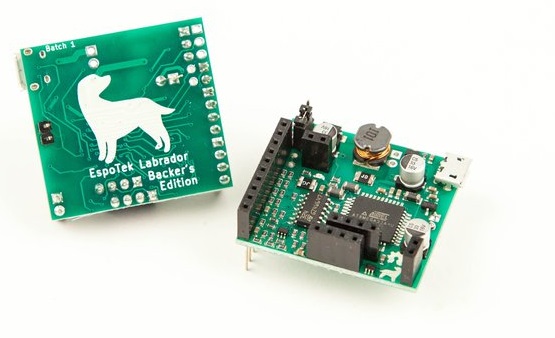
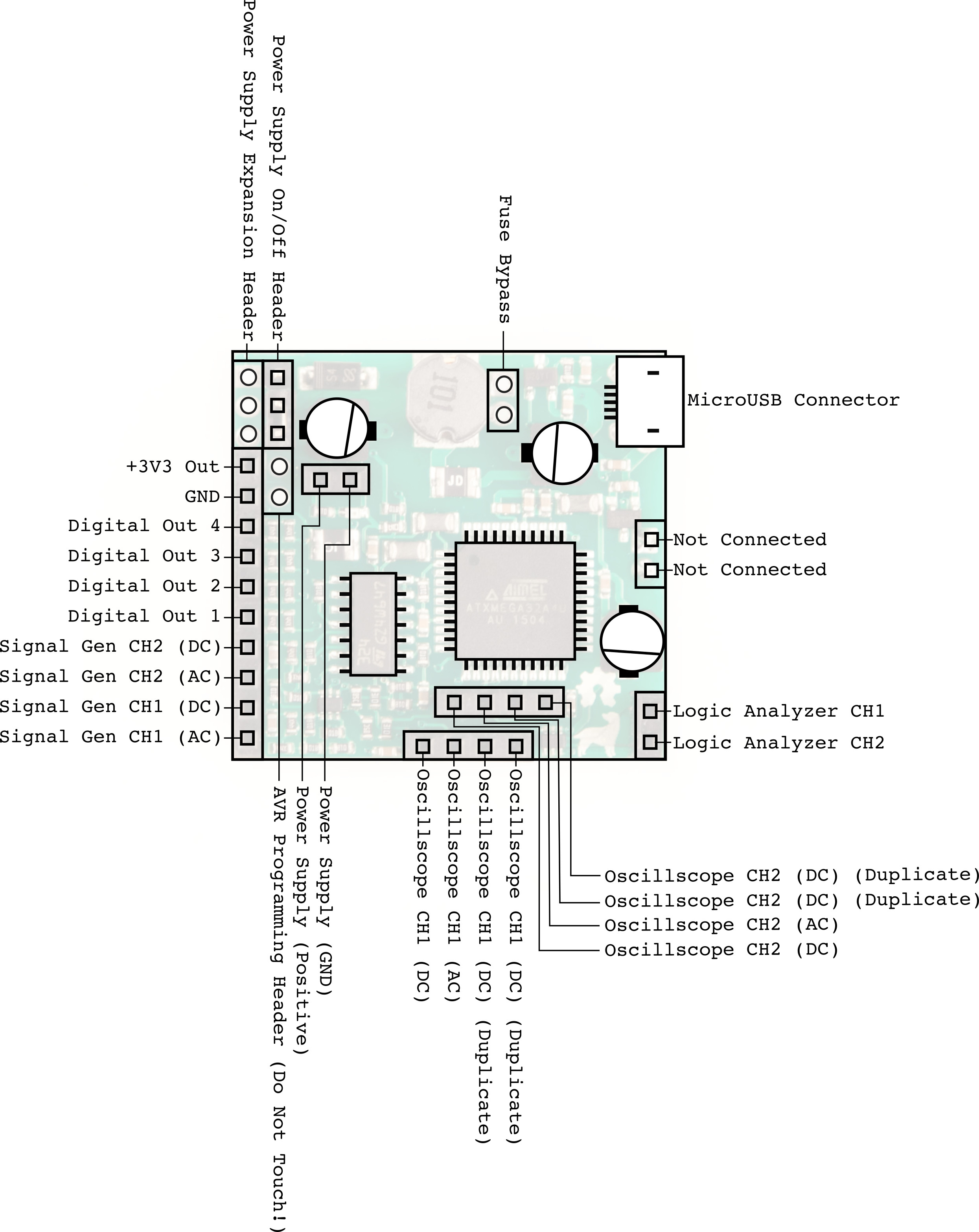
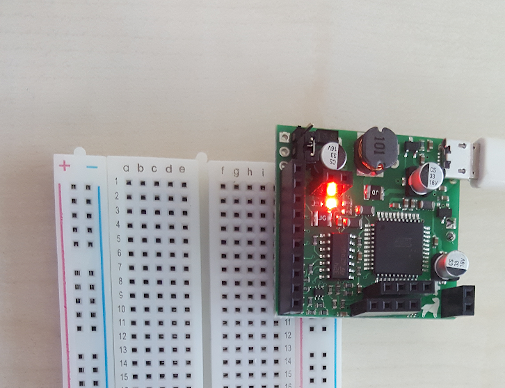
- The (link to:) EspoTek Labrador board is a USB-connected board that provides the functions of an oscilloscope, a signal generator, a programmable power supply, a logic analyzer and a multimeter.
- Documentation and Tutorial:
(link to:) github wiki - Desktop software:
- (link to:) github releases
- (current download) EspoTek_Labrador-2cc0678-x86_64.AppImage
- 2025-08-24 update: downloaded: EspoTek_Labrador--x86_64.AppImage. Executed fine.
- You must make it executable before it will run.
In File Manager, right click AppImage file
Properties -> Permissions
Check box to Allow Executing File as Program
Double-click AppImage to start.- update on website 2025-08:
The PC/Raspberry Pi software can be downloaded from GitHub Releases.
(Note: on rPi 4 you need to be running VL805 firmware release 0138a1 or later for the Labrador Board to work on the USB-A ports.) - The file: 69-labrador.rules
must be copied to the /etc/udev/rules.d folder- However, had trouble copying this to rPi-400. Error permission denied. Tried changing permissions, successful on the file,
but the folder, .../rules.d wouldn't let me change permissions from file manager.
However, in terminal, $ sudo cp ... worked
------------------------------------
- Specs:
Oscilloscope (2 channel, 750ksps)
Arbitrary Waveform Generator (2 channel, 1MSPS per channel)
Programmable power Supply (4.5 to 12V, 0.75W max output, with closed-loop feedback)
Logic Analyzer (2 channel, 3MSPS per channel, with serial decoding)
Multimeter (V/I/R/C) - There’s a fully featured 2-channel DAQ mode with variable sample rate, CSV export, signal averaging and offline playback, but it’s placed up in the menus rather than the main screen. Design decisions like this make Labrador suitable for makers and engineers of all skill levels. The oscilloscope, especially, was redesigned from first principles to take advantage of the host PC’s immense processing power and memory. Every sample captured by the board’s ADC is sent over USB and buffered by the PC software, allowing you to view minute-long streams at a 60Hz refresh rate without a single gap in the waveform.
- Customer Support at:
email admin@espotek.com
------------------------------------ - Operation
.
.
.
eof
Powered by Drupal